Alex Smalley wants everyone to wake up earlier, or at least have a little distraction at the end of the day. Why? To admire the sunrises and sunsets. According to Smalley, a leading British researcher in the field of fascinating weather effects, these fleeting moments are the most beautiful and inspiring periods of the day. A stunning sunrise or sunset can improve mood, increase positive emotions, and reduce stress even more than blue skies or vivid nightscapes. “When you see something huge and awe-inspiring, your own problems can seem smaller and you won’t worry about them as much.”
His conclusions regarding the effect of surprise echo the words of the prophet Jeremiah: “O Lord, God! You created the heavens and the earth by Your mighty power and Your outstretched arm – nothing is impossible for You” (Jer. 32:17).
King David also observed God’s creation and said: “The sky declares God’s glory, and the firmament tells about the work of His hands” (Ps. 18:2). Regarding the sun, he says: “Its rise is from the edge of the sky, and its circuit is at its end, and nothing can be hid from its heat” (v. 7). Therefore, “the Lord’s Law is perfect, it strengthens the soul” (v. 8). God’s glorious creation reflects the almighty Creator. Why not pause today and look up at the heavens in admiration?
From which place do you like to watch the sunrise or sunset? When you look at the sky, what do you discover about God?
Heavenly Father, in Your glorious heavens You show me the miracle of Your power.
“The eyes of the Lord look throughout the earth to strengthen those whose whole heart is toward Him.” — 2 Chronicles 16:9
The series “Rocky” tells about a young boxer who overcomes incredible difficulties to become a heavyweight champion. The movie “Rocky III” shows how a successful boxer is amazed by his own achievements. Television filming prevents him from spending time in the gym, and as a result, during another fight, he is knocked out by an opponent. The rest of the film is Rocky’s attempt to regain his fighting ability.
In a spiritual sense, King Asa of Judah lost his battle superiority. At the beginning of his reign, in the face of incredible difficulties, he always relied on God. When the mighty Kushites were preparing to attack, Asa prayed: “Help us, Lord, our God, for we rely on You, and in Your Name we have come against this multitude” (2 Chron. 14:10). God answered his prayer. Judea defeated the enemies and dispersed them (vv. 11-14).
Years later, Judea was again threatened with danger. However, this time the complacent Asa ignored God and turned to the king of Aram for help (2 Chron. 16:2-3). Everything seemed to work. However, God was not pleased. The prophet Hanani told Asa that he had stopped trusting God (vv. 7-8). Why didn’t he rely on God the way he used to?
Our God is unfailingly trustworthy. His eyes “look throughout the earth to strengthen those whose whole heart is toward Him” (v. 9). When we fully rely on the Lord, we experience His power.
As you get older, does it get easier or harder for you to trust Heavenly Father? Why do you think this happens? How can God strengthen your faith?
Dear Jesus, help me to rely on You more and more every day.
“I will visit you and fulfill My good word about you to bring you back to this place.” — Jeremiah 29:10
It has been many years since we left the small town in Oregon where our family grew up. We have great memories there, and a recent visit brought back some of the highlights: our girls’ soccer games, our old house, church gatherings, and our friends’ Mexican restaurant. The city had changed, but there was enough familiarity in it to make us want to return again.
When the Israelites went into exile in Babylon, they missed the familiar people, sights, and culture. They forgot that they were cast out for rebelling against God. So when the false prophets told the exiles that they would return home in two years (Jer. 28:2-4; 29:8-9), they found a receptive audience.
However, God condemned these false prophets and their false promises. “Do not let your prophets who are among you lead you astray” (Jer. 29:8). He had plans for His people “to give [them] a future and a hope” (v. 11). Despite the complexity, difficulty and unusual circumstances, God was with His people. He said to the exiles: “And you will seek Me, and you will find Me, when you seek Me with all your heart” (v. 13). God will return them “to the place from whence [them]… was driven out” (v. 14), but at the time determined by Him.
Nostalgia plays an evil joke with the mind, causing sadness for what once was. Don’t miss out on what God is doing right now. He will fulfill His promises.
What difficulties are you experiencing now? How does God demonstrate His faithfulness?
Heavenly Father, help me flow to You in the present and not long for the past.
“Salvation to our God who sits on the throne and to the Lamb!” —Revelation 7:10
Catherine’s work on Bible translation is based on love for God and people. Catherine rejoices when women in India come to a deeper understanding of Scripture by reading it in their native language. “When they read the Bible, they often start cheering and clapping their hands. When they read about Jesus, they say, ‘Oh, that’s great!'”
Catherine wants more people to read the scriptures in their own language. In this desire, she is guided by the vision of the apostle John on the island of Patmos. Through the Spirit, God led him to the heavenly throne room, where he saw “a great crowd that no one could count, from all peoples, tribes, nations, and languages, [that] stood before the throne and before the Lamb” (Rev. 7:9). They all praised God, saying: “Salvation to our God” (v. 10).
The Lord continues to increase the great number of people who glorify Him. He uses not only the work of Bible translators and those who pray for them, but also those who lovingly extend a helping hand to their neighbors, bringing them the good news about Jesus Christ. We can rejoice in this joyful mission, marveling at how God prompts more and more people to join in the angelic praise: “Glory, and wisdom, and praise, and honor, and strength, and power, to our God forever and ever” (v. 12).
Do you see how God moves people to praise and honor Him? How can He invite you to join His mission of spreading the Good News about Jesus?
Savior God, thank you for the gift of Jesus. Please help me to show Your amazing love to others.
“How great is Your Name on the whole earth.” — Psalm 8:2
On July 12, 2022, scientists were expecting the first images from the new James Webb Space Telescope. A state-of-the-art telescope can look further into the universe than mankind has ever seen before. Suddenly, a breathtaking image emerges: a colorful spacescape of the Carina Nebula that has never been seen before. One NASA astronomer quoted Carl Sagan, a famous atheist: “Something incredible is waiting for us somewhere.”
Sometimes people can look God in the eye and not see Him. However, the psalmist David looked at the sky and knew exactly what he saw: “Your glory is above the heavens” (Ps. 8:2). Sagan was right about something “unbelievable” that awaits us, but he did not realize what David understood: “When I see Your heavens – the work of Your fingers, the moon and the stars that You have established – then what is man that You remember him?” (vv. 4-5).
When we see pictures of distant space, we are amazed not so much by technology, but by the fact that we are witnesses of God’s creation. We marvel at the fact that in the infinity of creation, God made man “master of the creation of His hands” (v. 7). Indeed, “something incredible awaits us,” and it is God who is waiting to bring believers in Jesus to Himself when He returns to earth again. This is the most exciting image of all existing!
What thoughts come to your mind when you look at images of deep space? How do you feel God in them?
Creator God, I am amazed by the glory of the heavens and the beauty of Your creation. Thank you for taking care of me in the midst of such an amazing creation!
“And I praised joy: that there is no good for man under the sun, except to eat, and drink, and be merry.” — Ecclesiastes 8:15
Every spring in Japan, the sweet-smelling cherry blossoms flood the entire country with exquisite pale and bright pink colors, delighting the senses of both residents and tourists. The ephemerality of flowering cultivates in the Japanese an acute awareness of the need to enjoy beauty and fragrance while they last. The Japanese call this conscious pleasure something that changes quickly, “mono-no aware.”
It is human nature to seek and continue the feeling of joy. However, the reality that life is riddled with difficulties means that we must develop the ability to view pain and pleasure through the lens of faith in a loving God. We should not be overly pessimistic, nor should we create an unrealistically “sunny” outlook on life.
The book of Ecclesiastes offers us a useful model. Although this book is sometimes considered a catalog of negative statements, the same King Solomon who wrote that “everything is vanity” (Eccl. 1:2), also encouraged his readers to find joy in the simple things of life, saying: “And joy I praised: that there is no good thing for a man under the sun, except to eat, and drink, and be merry” (Eccles. 8:15).
Joy comes when we ask God to help us “know wisdom” and learn to see “every act of God” (vv. 16-17), both in beautiful periods of life and in difficult ones (Eccl. 3:11-14; 7:13-14), knowing that neither is permanent on this side of heaven.
What stage of life are you in now? How to find joy in it? Dear Father, thank you for being the source of beauty and joy in my life. Author: Kirsten Holmberg
“As the Lord lives, I will only say what the Lord says!” — 2 Chronicles 18:13
After the Paris Peace Conference, which ended World War I, French Marshal Ferdinand Foch bitterly remarked, “This is not peace. It is a truce for twenty years.” Foch’s view contradicted the popular belief that this terrible conflict would be “the war to end all wars.” Twenty years and two months later, World War II broke out. Foch was right.
Many years ago, Micah, the only true prophet of God in the region at that time, consistently prophesied dire military consequences for Israel (2 Chron. 18:7). In contrast to him, four hundred false prophets of King Ahab prophesied victory. One of Ahab’s officials said to Micaiah: “These are the words of those prophets – with one voice they announce good to the king. Let your word be like that of each of them – and you will speak well” (v. 12).
Micah answered: “I will only speak what the Lord says” (v. 13). And he prophesied about “Israel scattered on the mountains like sheep without a shepherd” (v. 16). Micah was right. The Arameans killed Ahab, and his army scattered (vv. 33-34; 1 Kings 22:35-36).
As followers of Jesus, we share a message that goes against conventional wisdom. Jesus said: “No one comes to the Father except through Me” (John 14:6). Many do not like this message. As people say, it is too exclusive. However, Christ brings a message of hope that is all-encompassing. He welcomes everyone who turns to Him.
If the Spirit prompts you to say or do something, how do you do it with love? When have your own assumptions needed God’s testing?
Heavenly Father, please give me the wisdom to discern Your truth.
“Let your word be: “yes-yes”, “no-no”. And anything more than this is from the evil one.” — Matthew 5:37
When Gandalf the Gray faced Saruman the White, it became clear that the latter had strayed from what he was supposed to be doing – helping to protect Middle-earth from the evil Sauron’s rule. What’s more, Saruman made an alliance with Sauron! In this scene from The Fellowship of the Ring, based on Tolkien’s classic work, two former friends engage in an epic battle of good versus evil. If only Saruman had not strayed from his course and done what was right!
King Saul also failed to stay on the right path. In one of the stories, it is said that he “drove out [from Israel] the fortune-tellers and soothsayers” (1 Sam. 28:3). It was the right move, because God declared that fascination with the occult is “an abomination” (Deut. 18:9-12). However, when God did not answer the king’s pleas (because of his own previous sins) about how to deal with the huge Philistine army, Saul commanded: “Find me a fortune-teller, and I will go to her and ask her” (1 Sam. 28:7). What a change of course! In the end, Saul was defeated because he himself had violated his previous command, which was correct.
A thousand years later, Jesus said to His disciples: “Let your word be: ‘yes-yes’, ‘no-no’. And anything more than this is from the evil one” (Mt. 5:37). In other words, if we have made a commitment to obey Christ, it is vital that we keep that promise. So, let’s stay in Christ, with God’s help!
What helps you keep your commitments? Why is it so important not to deviate from the right path?
What is missing most in our country today? What a shame – peace. Even today’s holiday of the Resurrection of Jesus Christ is overshadowed by the fact that many families do not celebrate it at home. And many men, sons and daughters meet this holiday in the trenches at ground zero. That is why today’s Passover in Ukraine has pixel colors. Because it is thanks to our defenders that we can be in the church and celebrate this great holiday.
What is so special about peace that when it is there, we perceive it as something familiar, and when we lose it, everything around us becomes joyless and anxious?
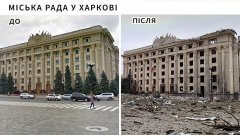
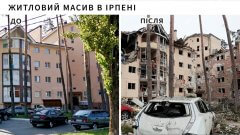
The war that is still going on in our country has reminded us how valuable peace is. Because when our neighbors decided to bring their “Russian peace”, for many people everything was divided into “before” and “after”. And this is how some cities looked before the arrival of the “Russian Peace” and after.
Kyiv, Kharkiv, Irpin… Many beautiful and green cities turned into ashes and ruins. Why? Because they lost the real peace, and instead came to them the diabolical, fiendish “Russian peace”.
In fact, peace is the state for which God created us. Therefore, living without peace is very difficult and I would say impossible. Today’s holiday reminds us of this, because it is for this that our Lord Jesus Christ came.
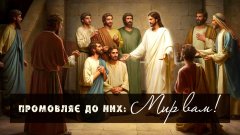
Do you know what the first words Jesus said to his disciples after the resurrection? Yes, you were not mistaken, He said, “Peace be with you.”
We can read about this in the Gospel of John in chapter 20:
“On the same day, the first day of the week, when the evening had come, and the doors where the disciples had gathered were locked because they were afraid of the Jews, Jesus appeared and stood in the middle and said to them: Peace be with you!“ (John 20:19)
But a logical question arises, what kind of peace does the Lord Jesus tell us about? He talks about the peace that every person needs and without which we cannot have real peace. This is what he went to the cross for, shed his blood for, and gave his life for. What kind of peace is this? This is peace with our Creator – Heavenly Father.
If this peace is so important that Jesus gave His life, how can we obtain it? Christ says about this a little later in this Gospel:
“This is written so that you may believe that Jesus is the Christ, the Son of God, and so that, believing, you may have life in His Name!” (John 20:31)
So how exactly can we have God’s peace? Only through faith in Jesus Christ as your personal Savior. This peace begins with repentance and it is through it that we receive forgiveness of sins and reconciliation with the Heavenly Father. Everyone needs this peace, especially in our country. And it is precisely without this peace that there will be no truly happy life, even when the war in our country ends.
That is why Jesus says today: Peace be with you! May this peace be between you and God. Between you and your relatives. Between you and your neighbors. And may the Lord help that this peace has come for our country as well.
A hundred years ago, lush forests covered about 40 percent of Ethiopia’s territory, but today it covers only 4 percent. Clearing areas for agricultural needs without proper tree protection has led to an ecological crisis. The vast majority of the remaining small areas of green space are protected by churches. For centuries, local Ethiopian Orthodox churches have nurtured these oases in the middle of the barren desert. If you look at aerial photos, you will see green islands surrounded by brown sand. Church leaders insist that caring for trees is part of their obedience to God as stewards of His creation.
The prophet Isaiah wrote to the people of Israel who lived in an arid region. He pointed to the future planned by God, in which “the wilderness and the forest will rejoice, and the steppe will rejoice and blossom” (Is. 35:1). God wants to heal not only His people, but also the whole earth. “I will create a new heaven and a new earth” (Is. 65:17). In God’s new world, “the desert… will blossom like a rose” (Is. 35:1).
God’s concern for creation, including humans, motivates us to care for him as well. We can live in harmony with His plan for the ultimate healing of the world by caring for what He has created. We can also join God’s cause to make all kinds of deserts bloom with life and beauty.
Where do you see a barren and suffering creation? How to help deserts bloom?
Lord God, please show me how to help heal and restore what is broken in the world.