
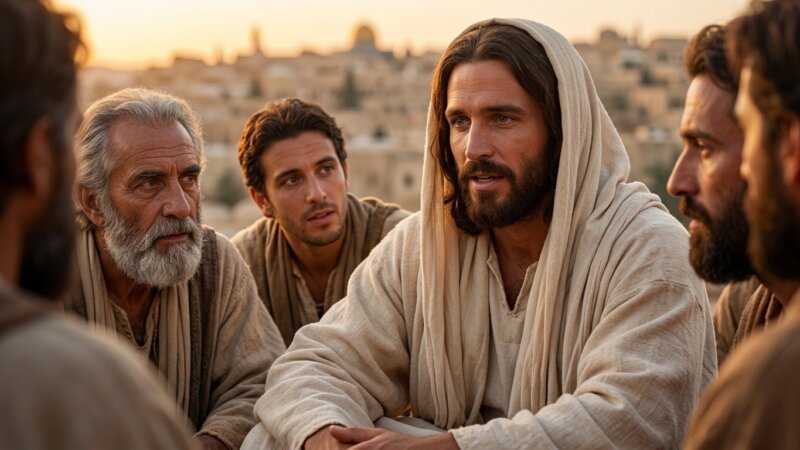
Do you remember the last time you were exhausted? Maybe you’ve been working on a complex project all day or week. You may have felt drained after helping other people in your life. Or maybe difficult situations and failures have made you think about giving up. We all get tired sometime.
Paul, the author of the Epistle to the Galatians, knew that the people to whom he was writing would also tire of their work. In Paul’s day, people were being persecuted and hurt, and Paul wrote to encourage them in the work they were doing.
Hidden within Paul’s encouragement to the Galatians is this truth:
Even good people get tired of doing good things.
That is why Paul calls everyone to do good. We must continue to help people. We must continue to share the hope of Jesus with people. We must continue to try to live the way God wants us to live.
God knows we’ll get tired eventually. And when we get tired and frustrated, we probably start asking ourselves why we’re doing all this at all (maybe you’ve already asked yourself).
But Galatians 6:9 calls us to persevere in good works. Just as a farmer must work diligently to sow his crop and wait months before the actual harvest, Paul says that the harvest will be for those who do not give up.
Like the Christians in Galatia, we too must persevere in living godly lives and helping others. If we do not give up, the scriptures say there is a reward waiting for us. We may receive this reward during our time on earth or in heaven, but regardless of when we receive it, we must persevere in doing good.
It means that what you do matters. There is value in the way you live and love others.
So take some time today to reflect on what you have done and can continue to do for others. Who can you help? Who can you share your hope in Jesus with? How can you persevere in living a godly life?
If you feel tired or defeated, make a commitment today to never give up. Choose to persevere in whatever season of life you are in, knowing that there will be a harvest for those who make it to the finish line.
Can there be anything beautiful in grief? Grieving a bereavement? Crying from deep and heavy heartache?
Although grief is a necessary part of life, no one wants to grieve. But in the second beatitude, Jesus’ series of promises about the Kingdom of God, Jesus said:
“Blessed are the sorrowful, for God will comfort them.”
Matthew 5:4
No one can appreciate rain more than someone who has lived in the desert. No one can appreciate food more than someone who has really starved. And no one can know God as their Comforter like one who desperately needed comfort.
Unfortunately, death, decay, and disappointment are part of this world. But even in our sorrow and suffering, God is ready to comfort us—in unique and meaningful ways that only He can.
The Holy Spirit is often called the “Comforter” as well as the “Helper”, “Counselor” or “Intercessor”. But no matter what His name is, that is always who He is. Even in our grief, He is always God Who thinks of the best for us.
So how does God comfort us? He does this through His Spirit, through His Word, and through His people.
Do you have eyes to see how He follows you steadfastly? Have you opened your heart to His comfort?
If you are a follower of Christ who is grieving today, remember: Jesus Himself promised that you will be comforted. He is always good, He is always faithful, and He is right here ready to help.
Therefore comfort one another, and build one another up, as you do! — 1 Thessalonians 5:11
Words of encouragement are very important in the workplace. How employees communicate with each other affects customer satisfaction, company profits, and the work environment. Research shows that in the most successful work teams, people say six times more words of praise than words of condemnation or sarcasm. Conversely, in the least successful teams, there are three negative comments for every positive word.
Apostle Paul learned from his own experience the importance of words in building relationships and achieving results in ministry. Before meeting Christ on the road to Damascus, he terrorized the followers of Jesus with words and deeds. But at the time when the apostle wrote the Epistle to the Thessalonians, he, thanks to the great work of God in his heart, became a man of great encouragement and encouraged his readers to comfort one another. The Apostle Paul demonstrated how to support others by reflecting the Spirit of Christ.
At the same time, the apostle reminded his readers who is the Source of all comfort. Trusting the One who loved so much that He died for us is a great reason to comfort others, forgive, inspire and lovingly correct (1 Thessalonians 5:10-11).
The Apostle Paul shows us that mutual encouragement is one of the ways of spiritual help and a reflection of the patience and goodness of God.
Heavenly Father, help us to show each other the mercy and kindness with which You bless us every day.
How wonderful to discover the best qualities in others!
Author: Martin de Haan
Take My yoke upon you, and learn from Me, for I am quiet and humble in heart, and you will find rest for your souls. — Matthew 11:29
My friend and his wife are in their nineties. Having been married for 66 years, they wrote the history of their family for their children, grandchildren and great-grandchildren. The last chapter, entitled “Letter from Mom and Dad”, contains important life lessons. One of them even made me stop and examine my own life: “If you find that your Christian life is exhausting you, draining all your energy, then know that you are practicing religion, and not enjoying a close relationship with Jesus Christ. A true walk with the Lord does not take away strength, but fills energy and revives life” (Mt. 11:28-29).
Eugene Peterson in his book “The Message” paraphrases the words of Jesus: “Are you tired? Are you exhausted? Are you already tired of your religion? Then let’s go together and work together. Know the unobtrusive rhythms of grace.”
When I think that serving God is all about me, I start working for Jesus instead of walking with Him. There is a big difference in this. If I do not walk with Christ, my spirit becomes weary, weak. People are getting annoying. You forget that they were created in God’s image. Everything seems wrong.
If I feel that I am practicing religion and not enjoying my relationship with Jesus, then it is time to take the burden off myself, put it on Christ and walk with Him in the “unobtrusive rhythm of grace.”
Lord Jesus, I come to You today to walk the path of Your grace instead of frantic work.
Jesus Christ wants to walk our way with us.
Author: David McCasland
Your work is not in vain in the Lord! — 1 Corinthians 15:58
In the third year of a difficult struggle with depression due to physical limitations and constant pain, I confessed to my friend: “My body is just falling apart. I feel as if I am of no use to God or people at all.”
The friend put her palm on mine and then said, “Isn’t there any use in me greeting you with a smile or just listening to you? Is it all in vain that I pray for you and say kind words?”
I turned around in my chair, and then answered: “Of course not.”
“Then why do you tell yourself such a lie? – she frowned. – You do a lot for me and other people.”
I thanked God for the important reminder that any of our work is not in vain for Him.
The Apostle Paul assures us that our bodies, despite their corruption and weakness, will one day “stand strong” (1 Cor. 15:43). God promised our resurrection with Christ, so we can confidently do even the smallest thing for Him, knowing that it benefits His Kingdom (1 Cor. 15:58).
Even with serious physical limitations, a simple smile, a word of encouragement, a prayer, or a demonstration of faith can serve the body of Christ, in which all the various members are interdependent. If we serve the Lord, He does not shy away from even our tiny offerings.
Jesus, thank you for valuing us and using us for the spiritual edification of others.
Do what you can, and give the rest to God.
Author: Sosheel Dixon
Sing to our God, sing, sing to our King, sing. — Psalm 46:7
Singing affects the brain! Research shows that when we sing, our body releases hormones that reduce anxiety and stress. Another study indicates that when a group of people sing, their hearts begin to beat in unison.
In his letter, the apostle Paul encourages the church to speak to one another in psalms, hymns, and spiritual songs (Eph. 5:19). In general, the phrase “sing to God” is found in the Bible more than 50 times.
In the Second Book of Chronicles, it is told about how God’s people went against the enemy with singing, thus demonstrating their trust in God… The enemy came to the land of Judea. Alarmed, King Jehoshaphat gathered all the people to pray together in fervent prayer. They did not eat or drink, but only prayed: “We do not know what to do, because our eyes are on You!” (2 Chron. 20:12). The next day, the people set out to meet the enemy. They were not led into battle by desperate warriors, but by an ordinary choir. They believed God’s promise that they would defeat the enemy even without a fight (2 Chron. 20:17).
When the people continued to attack their enemies, they began to fight among themselves! By the time the Jews reached the battle site, the battle was already over. God saved His people.
The Lord prompts us to praise Him by singing, because there are many reasons for this. Whether we go into battle or stand still, praising God in song gives us the power to change our thoughts, hearts, and lives. P
God, we praise You for Your eternal love and faithfulness! You protect us and direct our path, so we entrust our lives to You.
A harmonious relationship with God gives birth to a song of praise.
Author: Amy Peterson
It is tempting to think that we are strong, we are capable, and “we have everything under control.” But in reality we are powerless on our own. We desperately need God—every moment of every day.
We would not exist if He had not created us. We would not live if He did not sustain us. We would not prosper if He did not guide, protect and empower us.
The author of 1 Chronicles knew the importance of relying on God. He said:
“Seek the Lord and His strength, always seek His presence!”
1 Chronicles 16:11
In a world that is constantly focused on ourselves, it is very important to recognize our need to depend on God. We need His strength, we need His power, and simply put, we just need Him!
If you feel confident in your own self-sufficiency, ask yourself: Who created this world? Who made my body, my mind and my soul? My eyes, my legs, my lungs? Who has the power to save or destroy? Who holds the keys to life?
Just as we constantly need air, we need God’s strength and presence to sustain our every step.
So how can we continually seek His power and presence? Staying in touch with Him: talking to Him throughout the day, making Him a priority in the midst of a busy schedule, humbly asking for His strength.
God will never reject a heart that sincerely seeks Him.
So come to Him in your weakness and He will give you strength. Come to Him with your questions, needs, and desires, and He will give Himself to you. And this is the best that can be.
My heart is inclined to Your testimonies. — Psalm 118:36
Dr. Charles Eliot – the long-term president of Harvard University – was convinced that an ordinary person, if he reads the best books of world literature for a few minutes every day, can acquire a substantial education. In 1910, he completed 50 volumes of the so-called “Harvard Classics”, which contained selections from books in various fields – history, science, philosophy and fine arts. Each set of books had a special supporting material called “15 minutes every day” – that is, you had to read 8-10 pages every day for a year.
Imagine if we read God’s Word every day for fifteen minutes! We could then say with the psalmist: “My heart is inclined to Your testimonies, and not to profit. Turn my eyes so that they do not see vanity, in Your way You revive me! (Ps. 118:36-37).
Fifteen minutes every day is ninety-one hours in a year. But no matter how much time we choose to spend reading the Bible, the secret to success is regularity. Consistency is the key, not the amount of reading. If the Holy Spirit teaches us, the Word of God will make its way from our brains to our hearts – and then to our hands and feet. And we will see real changes in our lives.
“Show me the path of Your decrees, Lord, and I will stick to it to the end!” (Ps. 118:33).
I cry to You, Lord, that You may teach me today from Your Word. I want to hear Your voice, know You and draw closer to You.
The Bible is the only Book whose Author is always present with the reader.
Author: David McCasland
God designed our hearts and our brains—our emotions and our intellect—to work together.
For example, when we love someone, we are forced to get to know them on a deeper level. And when we discover their passions, their heartache, and what drives them to act, we often feel an even deeper kind of love.
When the apostle Paul wrote to the believers in Philippi (a city in Greece), he gave them this command:
“This is my prayer for you: That your love may grow more and more together with knowledge and understanding. I pray that you will always be able to distinguish the important from the worthless, and always be able to choose the best, and remain pure and blameless until the Day of Christ’s coming.”
Philippians 1:9-10
No one wants to waste their time, their energy or their one precious life. But when we understand what is important – to know and love God, to know and love people – we can decide to spend our lives on the most important things.
So what did Paul want from the Philippians?
Paul desired that their love should be evident, and that their knowledge should continue to increase; to cultivate a life of love and understanding continued to flourish.
The Bible teaches that knowledge of God is true understanding (Proverbs 9:10) and that the greatest commandment is to love God and people (Matthew 22:37-40). And we gain insight into God’s character by studying His Word, learning from His creations, and living with love.
When we love God with our heart and mind, rely on knowledge and faith, and accept truth and grace, we can experience a fuller understanding of God’s beautiful plan.
We can shine a light into an increasingly dark world. We can add vision, clarity and meaning to any circles we attend. We can be known for loving our Creator and the people around us. We can live in honor of God until the day we meet our Savior face to face.
He surrounded him, He looked after him, He kept him like the apple of his eye. — Deuteronomy 32:10
“God is like an eyelid,” said my friend Riley, and I just blinked. What does she mean? “Tell me more about it,” I asked. We studied interesting biblical metaphors together. For example, God compares Himself to a woman in labor (Is. 42:14) or a beekeeper (Is. 7:18). But what Riley said – that God is like an eyelid – was something new and confusing to me. She, however, pointed me to Deuteronomy 32:10, where Moses praises God for leading His people and protecting them “as the apple of His eye.”
“What surrounds and protects our pupils? – Riley asked me. – Of course, the eyelid!” Therefore, God can be compared to the ages that automatically protect our delicate eyeballs. Vika is constantly watched by our eyes. Protect them from various dangers. When we blink, it cleans them of dirt and dust. And the eyelids moisturize the eyeballs, keeping them healthy. Finally, when they close, it allows us to sleep, to rest.
When I thought about this metaphor, I couldn’t help thanking the Lord for the large number of comparisons that help us understand His love for us. So, when we close our eyes at night or open them in the morning, let us remember God and praise Him for His sincere care and tender care. P
Thank You, God, for those wonderful metaphors through which You help us understand You better. Thank you for protecting us like the apple of an eye.
Closing your eyes, do not forget to thank God for His protection.
Author: Amy Peterson