
“There is neither Jew nor Greek, there is neither slave nor free.” — Galatians 3:28
Business analyst Francis Evans studied the work of 125 insurance agents to understand their formula for success. Surprisingly, the level of competence did not play a key role. Instead, Evans found that customers tended to buy insurance from agents who held the same political views, had the same education and even the same height as them. Scientists call this phenomenon homophily, that is, attraction to people who are similar to us.
Homophily also manifests itself in other areas of life, for example, in our tendency to marry and be friends with those who are similar to us. At the same time, if we give preference only to people of “our kind”, society can be divided into racial, political and economic castes.
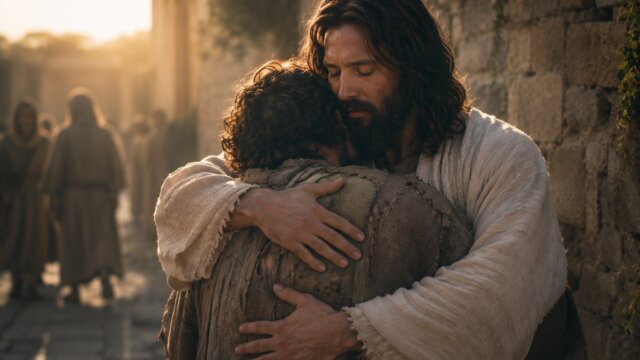
In the first century, Jews communicated only with Jews, Greeks with Greeks, and the rich and the poor never crossed paths. However, in Romans 16:1-16, the apostle Paul describes a church in Rome whose members include, among others, Priscilla and Aquila (Jews), Epenetus (Greek), Thebes (“a benefactor of many”), and Philologus (a common name for slaves). What brought such different people together? They were gathered by Jesus, in Whom “there is neither Jew nor Greek, there is neither slave nor free” (Gal. 3:28).
It is only natural to want to live, work and go to church with people like us. However, Jesus encourages us to go beyond this. In a scattered world, He unites us into one family.
How to communicate with people who are not like us? What can you do this week to overcome ethnic or economic barriers?
Lord Jesus, I praise You for working to unite our divided world.
Author: Sheridan Voysey